N’Djamena, Chad—rarely the first name dropped in African travel circles—holds a quietly dazzling truth: its food scene is pure magic. Think smoky grilled meats, vibrant spice blends, and open-air spots where every bite tells a story. I didn’t expect to fall hard for a city so overlooked, but between the golden sunsets over the Chari River and the sizzling plates served with pride, my camera and stomach got equally spoiled. This is dining with soul—and yes, it’s very Instagrammable. In a place where life moves at the pace of desert winds and river tides, meals are not rushed. They are rituals, celebrations, and declarations of identity. Here, food isn’t about trends; it’s about truth.
First Impressions: A City That Doesn’t Try Too Hard
N’Djamena does not announce itself with fanfare. There are no towering skyscrapers, no neon-lit boulevards, no tourist kiosks handing out glossy maps. Instead, the city reveals itself slowly, in fragments: a donkey cart rattling down a red-dirt road, a group of children laughing outside a corner shop, the distant call to prayer weaving through the morning heat. The architecture is low and functional—sand-colored buildings with corrugated roofs, markets spilling onto sidewalks, and wide avenues where motorbikes dart like fireflies. At first glance, it may seem unremarkable, even austere. But those who pause begin to notice the quiet rhythm beneath the surface, a rhythm shaped by the Chari River and the vast Sahelian landscape.
What surprises most is how deeply hospitality is woven into everyday life. A stranger offers directions with a smile. A shopkeeper shares a story while weighing mangoes. And at mealtimes, this warmth transforms into something even more profound: an invitation to share not just food, but culture. It’s in these moments that N’Djamena’s culinary soul begins to shine. The city doesn’t cater to expectations. It doesn’t perform for tourists. Yet, for those willing to look beyond the surface, it offers one of Africa’s most authentic and rewarding dining experiences.
Travelers accustomed to polished destinations may initially overlook N’Djamena. But authenticity often hides in plain sight. The city’s lack of pretense is not a shortcoming; it’s a strength. Its food culture thrives not because it seeks attention, but because it has always been essential to life here. Meals are prepared with care, shared with generosity, and rooted in generations of tradition. To dine in N’Djamena is to witness a cuisine that doesn’t need reinvention—it simply needs to be seen.
The Heartbeat of Chadian Cuisine: Flavors That Ground You
At the core of Chadian food is a deep connection to the land. The ingredients are simple, often grown or raised locally, and transformed through time-honored techniques. The most common staple, boule, is a thick porridge made from millet or sorghum, cooked until it forms a smooth, dough-like consistency. It is not flashy, but it is foundational—served alongside stews, used to scoop up sauces, and shared from a single bowl among family members. This act of communal eating reinforces bonds and reflects a culture where nourishment extends beyond the physical.
Another cornerstone is couloucou, a savory paste made from okra, often served with fish or meat in a rich tomato-based sauce. Its texture is uniquely slippery, a quality prized in Sahelian cooking for its ability to carry flavor. Then there is sauce d’arachide, the beloved peanut stew that appears in nearly every household. Simmered slowly with onions, tomatoes, and sometimes leafy greens or chicken, it offers a creamy, nutty depth that lingers on the palate. These dishes are not plated for visual impact; they are served with purpose, designed to sustain and satisfy in a climate where heat and labor define daily life.
Flavor in Chadian cuisine comes not from complexity, but from intensity. Spices are used with intention, not excess. A common blend, similar to what some call doukka, combines ground chili, cumin, and dried herbs, adding warmth without overwhelming. Grilling over wood or charcoal imparts a smoky depth that cannot be replicated in modern kitchens. What makes these meals remarkable is not their presentation, but their honesty. Each dish tells a story of resilience, resourcefulness, and deep cultural pride. And when served under the open sky, with hands as the only utensils, the experience becomes unforgettable.
For visitors, the simplicity of these dishes can be a revelation. There are no fusion experiments, no deconstructed plates, no molecular gastronomy. What exists is food in its most essential form: flavorful, nourishing, and deeply human. And yet, when photographed in natural light—the golden hue of peanut sauce glistening, steam rising from a fresh batch of boule—these meals possess an organic beauty that no styling can match.
Street Eats with a View: Where Locals Dine Under the Stars
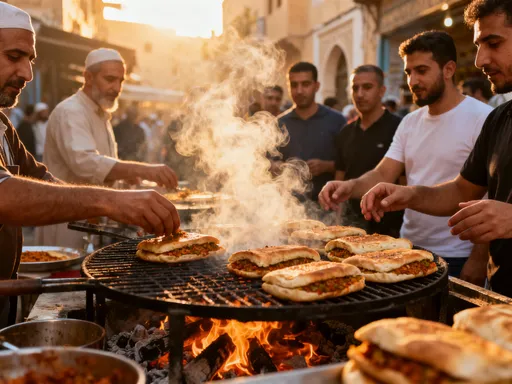
As the sun dips below the horizon and the day’s heat begins to fade, N’Djamena comes alive in a different way. Families spill out of their homes, neighbors gather on plastic chairs, and the city’s true dining scene emerges on the sidewalks: the maquis. These open-air eateries, often little more than a grill, a few tables, and a canopy of string lights, are the heartbeat of evening life. They are unpretentious, accessible, and bursting with energy. This is where locals come not just to eat, but to connect, laugh, and unwind.
The star of the maquis menu is the brochette—skewers of marinated meat grilled over glowing charcoal. Beef, goat, and sometimes chicken are seasoned simply, often with just salt, pepper, and a touch of onion. The grills smoke constantly, filling the air with an aroma that draws people in like a beacon. Nearby, women prepare fresh salads: chopped tomatoes, onions, and peppers dressed with lemon juice, served on repurposed metal trays. Bottles of brightly colored sodas and local ginger beer catch the flickering light, adding a pop of color to the scene.
What makes these moments so visually compelling is their authenticity. There are no curated backdrops, no professional lighting setups. Instead, the beauty comes from real life in motion: steam curling into the night, children chasing each other between tables, the glow of phone flashlights illuminating menus when the lanterns dim. These are not staged for social media—yet they are inherently shareable, capturing the warmth, movement, and soul of Chadian hospitality.
For travelers, dining at a maquis is an invitation to participate, not just observe. It requires openness, a willingness to sit on a plastic chair, to eat with your hands, to smile at strangers. But in return, you gain something rare: a genuine connection to place and people. And when you bite into a perfectly charred brochette, the meat tender and smoky, served with a side of fresh salad and a cold drink, you understand why this is not just dinner—it’s an experience.
Hidden Garden Eateries: Oases of Taste and Texture
While the maquis dominate the streets, N’Djamena also harbors quieter, more intimate dining spaces—hidden garden restaurants and courtyard cafes that feel like secret escapes. Tucked behind unassuming doors or up narrow staircases, these spots offer a different kind of magic: a blend of privacy, natural beauty, and culinary refinement. They are not luxury in the Western sense, but they are elegant in their simplicity. Think low wooden tables, hand-painted menus, and fairy lights strung through trees, casting soft glows over white cloths and clay bowls.
These venues often source ingredients from local markets, preparing traditional dishes with a touch of care that elevates them without losing their essence. A plate of sauce d’arachide might be served in a hand-thrown ceramic dish, garnished with fresh herbs. Boule arrives warm, shaped neatly, accompanied by a trio of small stews. The chefs here are not hidden in the back; they often greet guests personally, explaining the origins of the meal, sharing stories of their families, or offering recommendations based on what was fresh that morning.
What makes these garden eateries so visually striking is their harmony with nature. Vines climb stone walls, potted plants line walkways, and the scent of jasmine lingers in the air. Lighting is soft and natural—lanterns, candles, and the occasional string of solar-powered bulbs create a warm ambiance that flatters both food and faces. Tableware is often earth-toned, made from local clay or woven fibers, adding texture and authenticity to every photograph.
These spaces are not designed for Instagram, yet they are inherently photogenic. A close-up of a spoon dipping into creamy peanut sauce, framed by green leaves and soft light, tells a story of care and tradition. A wide shot of a rooftop terrace, filled with guests laughing under the stars, captures the joy of communal dining. These moments are not staged—they emerge naturally from an environment that values beauty, connection, and flavor in equal measure.
The Art of the Spice Market: A Feast Before the Feast
No exploration of N’Djamena’s cuisine is complete without a visit to its central market, where the foundation of every great meal begins. The market is a sensory explosion: a labyrinth of stalls piled high with fresh produce, dried fish, handwoven baskets, and, most vividly, mounds of spices in every color imaginable. Bright red chili peppers sit in pyramids next to golden turmeric, deep brown cumin, and pale dried garlic. Women in vibrant wrappers kneel beside baskets, measuring out portions with weathered hands and practiced precision.
This is where flavor is born. The spice blends used in Chadian cooking are not bought in jars; they are crafted daily, often by hand. A vendor might mix chili, coriander, and dried mint to create a custom rub for grilled meat. Another grinds roasted peanuts for stews, the scent rich and warm. Dried herbs hang from the rafters, swaying gently in the breeze. Baskets of okra, tomatoes, and onions wait to be transformed into sauces. The market is not just a place to shop—it’s a living kitchen, a stage where ingredients are celebrated before they even reach the stove.
For food lovers and content creators alike, the market is a goldmine of visual storytelling. The colors are saturated and natural: deep reds, earthy browns, vibrant greens. The textures are rich—rough burlap sacks, smooth clay pots, wrinkled peppers. The light, especially in the late afternoon, filters through the canopy in golden beams, illuminating dust particles and creating a dreamlike atmosphere. A close-up of hands sifting through spices, or a wide shot of the bustling aisles, tells a story of tradition, labor, and abundance.
More than just a source of ingredients, the market is a cultural hub. It’s where recipes are exchanged, where elders teach the younger generation, where the rhythm of daily life unfolds. To walk through it is to understand that Chadian cuisine is not just about what is served on the plate, but about how it comes to be. Every meal begins here, in the dust and color and noise of the marketplace, where flavor is not manufactured, but cultivated.
Dining with a View: Riverfront Moments and Golden Hours
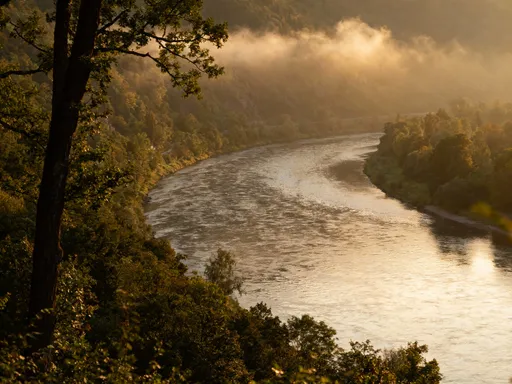
Along the banks of the Chari River, where the air cools and the sky stretches endlessly, a different kind of dining experience unfolds. Simple wooden tables are set up as the sun begins its descent, and locals gather to enjoy dinner with a view. This is not a tourist gimmick; it’s a way of life. The river provides relief from the day’s heat, and the golden hour transforms the water into a mirror of fire and gold. As the light shifts, so does the mood—from lively chatter to quiet contemplation.
Riverfront eateries range from basic grills to slightly more established spots with shaded seating. But regardless of formality, the experience is consistent: food served fresh, views that command attention, and an atmosphere that feels both communal and serene. A plate of grilled fish, seasoned with lemon and chili, arrives steaming. A bowl of millet porridge sits beside a colorful salad. Bottles of water and soda glisten in the fading light. Cameras come out not because someone says “This is Instagrammable,” but because the moment demands to be remembered.
What makes these riverfront meals so cinematic is the interplay of elements: the movement of the water, the silhouette of trees against the sky, the warm glow on faces and food. A photograph of a spoon dipping into peanut stew, with the river in the background, captures more than a meal—it captures a feeling. The slow pace, the shared silence, the sense of being present—these are the details that make dining here unforgettable.
For visitors, this is a chance to slow down, to eat not just for sustenance, but for connection. The Chari River does not rush, and neither should the meal. These moments are not about luxury or novelty, but about presence. And in a world that often values speed over depth, that is a rare and precious gift.
Why This Matters: Celebrating Cuisine Beyond the Usual Paths
N’Djamena may never top lists of the world’s most glamorous food capitals. It won’t compete with Paris, Tokyo, or Bangkok in terms of global recognition. But that is precisely what makes its culinary culture so valuable. In a world increasingly shaped by trends, filters, and viral moments, N’Djamena offers something different: authenticity. Its food is not performative. It is lived. It is passed down. It is shared.
True culinary discovery does not always happen in Michelin-starred restaurants or trendy pop-ups. Often, it happens in places like this—where the menu is written by tradition, where the kitchen is open to the sky, and where every meal feels like an act of generosity. To dine in N’Djamena is to be reminded that the most beautiful moments are not the most polished. They are the ones filled with soul, with warmth, with meaning.
For travelers, especially those seeking depth over spectacle, this city offers a powerful lesson: that the best meals are not found by following algorithms, but by following curiosity. It asks us to look beyond the familiar, to embrace the unfamiliar, and to trust that beauty exists in the unscripted, the unfiltered, the real. It invites us to eat with our hands, to smile at strangers, to savor not just the food, but the moment.
So let this be a call to explore—not just Chad, but any place that does not shout for attention. Let us celebrate cuisines that are not marketed, but lived. Let us honor the cooks, the vendors, the families who keep these traditions alive. Because in the end, the world’s most beautiful meals are not staged. They are served with pride, with love, and with an open heart. And sometimes, they are found in the most unexpected of places—like N’Djamena, where fire, flavor, and soul come together in perfect harmony.