Most travelers stick to Guam’s beaches and resorts, but the real magic lies off the beaten path. I ventured deep into its untouched forests, secret waterfalls, and rugged coastlines—places few ever see. These natural areas aren’t just beautiful; they’re alive with history, culture, and raw Pacific energy. If you’re craving authenticity over crowds, Guam’s hidden landscapes will blow your mind.
Beyond the Postcard: Discovering Guam’s True Natural Soul
When most people think of Guam, images of soft white sands, turquoise waters, and resort-lined shores come to mind. And while these attractions are undeniably stunning, they only reveal a fraction of the island’s soul. Beyond the postcard-perfect coastlines lies a quieter, wilder Guam—one shaped by volcanic ridges, dense jungle canopies, and centuries of CHamoru tradition. These lesser-known natural spaces offer a rare chance to connect not only with nature but with the island’s deeper story. For the thoughtful traveler, especially those seeking meaningful experiences over photo ops, stepping away from the well-trodden path is not just rewarding—it’s essential.
It was during a quiet morning hike near the southern coast that I first felt this shift. The trail was unmarked, overgrown in places, and led me through a grove of ifil trees whose gnarled roots twisted like ancient hands gripping the red clay soil. As I paused to catch my breath, a breeze carried the scent of wild ginger and salt from the unseen ocean. No voices, no music, just the rustle of leaves and the distant cry of a collared kingfisher. In that moment, I realized I wasn’t just visiting Guam—I was beginning to understand it. This kind of connection cannot be found in shopping malls or on crowded beaches. It happens in the stillness between footfalls, in the awareness that you are walking where few outsiders have dared to go.
Exploring these remote areas also means recognizing their fragility. Guam’s ecosystems have endured significant changes over the decades, from invasive species to land development. Yet, in the island’s hidden corners, resilience thrives. Native plants reclaim abandoned trails, birds return to restored forests, and the land remembers its rhythm. For visitors, this means every step carries responsibility. The decision to go off-grid isn’t just about adventure—it’s about respect, awareness, and the desire to leave things as you found them, if not better.
The Jungle Secrets: Exploring Inarajan Natural Pool & Its Surrounds
Nestled in the village of Inarajan in southern Guam, the Inarajan Natural Pool is one of the island’s best-kept natural treasures. Carved by centuries of wave action into volcanic rock, this series of tidal pools forms a natural infinity pool with breathtaking ocean views. Unlike man-made attractions, the pool changes with the tides, temperature, and weather, offering a dynamic experience with each visit. While it has gained some attention in recent years, it remains relatively uncrowded, especially in the early morning or on weekdays. The journey to the pool is part of the adventure—a winding descent through lush jungle, where breadfruit trees arch overhead and wild orchids cling to moss-covered branches.
The hike down is moderate but requires attention. The path can be slippery after rain, and sturdy footwear with good grip is essential. Along the way, visitors pass remnants of old stone walls and wooden carvings, subtle reminders of the CHamoru people who have lived in this area for generations. Inarajan itself is one of Guam’s oldest villages, known for its preservation of traditional culture, and the natural pool is more than a scenic spot—it’s a place of community, storytelling, and quiet reverence. Locals often gather here after work or on weekends, not to party, but to relax, reflect, and cool off in the embrace of nature.
Because the pool is fed by the ocean, water levels and currents vary. Safety is paramount. It is best visited during low to mid-tide when the pools are calm and accessible. Strong waves during high tide or stormy weather can make the area dangerous, and lifeguards are not always present. Families with young children should supervise closely, and swimming beyond the innermost pools is not recommended. That said, on a clear day, the experience is unforgettable—soaking in warm, clear water while the Pacific stretches endlessly before you, the sound of waves echoing against the cliffs. For those who make the journey, the Inarajan Natural Pool offers a rare blend of natural beauty and cultural continuity.
Where the Map Ends: Trekking Through the Talo’fo’fo River Valley
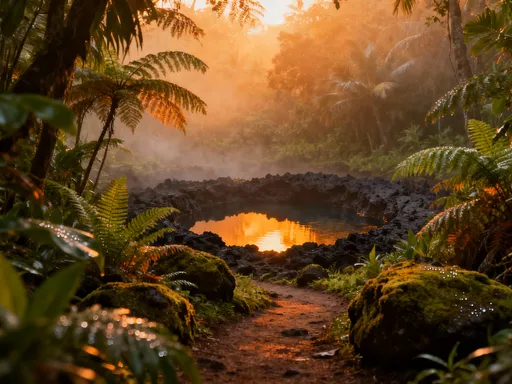
Far from the tourist hubs, deep in the eastern interior of Guam, lies the Talo’fo’fo River Valley—a place where the jungle feels truly untamed. This remote region is one of the island’s least-visited natural areas, not because it lacks beauty, but because it demands effort to reach. There are no paved trails, no visitor centers, and no signs in multiple languages. What you’ll find instead is raw, unfiltered nature: a winding river flanked by towering ifil and mapunyao trees, their thick canopies filtering sunlight into golden shards on the forest floor. The air hums with the calls of native birds, and the scent of damp earth and tropical blooms lingers in every breath.
The Talo’fo’fo River itself is a lifeline for the surrounding ecosystem. It supports a variety of native plant and animal species, some of which are found nowhere else on Earth. Conservationists have identified this valley as a critical zone for protecting Guam’s biodiversity, particularly as invasive species like the brown tree snake have disrupted other parts of the island. Efforts are underway to restore native vegetation and monitor wildlife, often led by local environmental groups in partnership with the Guam Department of Agriculture. Visitors who come here are not just explorers—they become witnesses to an ongoing story of ecological resilience.
For those planning a trek, preparation is key. The terrain is uneven, and GPS signals can be unreliable. It is advisable to go with a local guide or join an organized eco-tour, especially if you’re unfamiliar with jungle navigation. A lightweight rain jacket, insect repellent, and plenty of water are must-haves. While there are no formal facilities, some visitors bring small packs to carry out any waste, following the principle of leaving no trace. The journey is not about conquering the wilderness but about moving through it with humility and care. When you sit by the river, listening to the gentle rush of water over smooth stones, you begin to understand why places like this are worth protecting.
Clifftop Whispers: The Untamed Beauty of Two Lovers Point’s Hidden Trails
Two Lovers Point is one of Guam’s most famous landmarks, known for its dramatic cliffside view and the legend that gives it its name. Yet, beyond the main lookout—where tourists take photos and vendors sell souvenirs—lie lesser-known trails that wind along the coastline, offering solitude and sweeping vistas. These paths are not well-marked, and few visitors venture beyond the main platform, but for those who do, the reward is a deeper, more intimate experience of the island’s natural grandeur. The wind here is constant, carrying the salt-kissed breath of the Pacific, and the views stretch endlessly across the ocean, where the horizon blurs into sky.
Walking these hidden trails, you’ll notice the resilience of coastal plants—hardy shrubs with waxy leaves, sea grapes clinging to rocky crevices, and native grasses that bend but never break in the wind. These plants are adapted to harsh conditions, a quiet metaphor for the strength of the CHamoru people themselves. The area is also home to native bird species, including the Mariana fruit dove and the Micronesian myzomela, whose soft calls punctuate the silence. Binoculars can enhance the experience, allowing you to spot seabirds gliding along the updrafts without disturbing their space.
While the main viewpoint is safe and well-maintained, the side trails require caution. Some sections are narrow, with steep drop-offs and loose gravel. Proper footwear and a steady pace are essential. It’s best to visit in the early morning or late afternoon when the sun is less intense and the light casts a warm glow over the cliffs. Most importantly, visitors should remember that this is a place of cultural significance. While the full legend is often shared in tourist materials, the site itself is treated with respect by locals, and loud or disruptive behavior is out of place. By walking quietly and mindfully, you honor both the land and the people who have cared for it for generations.
Underground Wonders: Spelunking in Guam’s Natural Caves (With Caution)
Beneath Guam’s surface lies another world—one shaped by limestone, ancient coral reefs, and the slow work of water over millennia. The island is home to a network of natural caves, some of which are accessible to careful explorers. These formations are not vast underground labyrinths, but intimate spaces that reveal the island’s geological history. One such site is Pulantubu, a cave system near the northern plateau that has been studied for its unique mineral deposits and micro-ecosystems. While not open for casual exploration, guided tours led by environmental groups occasionally allow respectful visitation for educational purposes.
These caves are fragile environments. Stalactites grow at a rate of less than one centimeter per century, and a single touch can damage formations that took thousands of years to develop. Additionally, some caves are home to rare bat species and delicate microbial life that depend on stable conditions. For this reason, unguided exploration is strongly discouraged. Visitors interested in spelunking should seek out certified eco-tours that prioritize preservation and education. These tours often include safety briefings, protective gear, and lessons on cave geology, turning the experience into both an adventure and a learning opportunity.
The act of entering a cave is humbling. As the light fades and the air grows cooler, you become aware of the silence—a deep, resonant quiet that is rare in modern life. Stalactites drip slowly, and the walls glisten with moisture. Some caves have small chambers where ancient CHamoru people may have sought shelter or conducted rituals, though these areas are not disclosed to protect their integrity. Exploring these underground spaces is not about conquest but about reverence—recognizing that some of the island’s greatest wonders are hidden from view, preserved in darkness, waiting for those who come with respect.
Wild Coastlines: Finding Solitude at Piti Bomb Holes & Tepuyan Beach
On the western side of Guam, near the village of Piti, lies a unique marine environment known as the Piti Bomb Holes. Despite the dramatic name, these are not craters from war, but natural tide pools formed by ancient coral heads and wave erosion. Over time, the ocean carved deep basins into the reef flat, creating a series of interconnected pools that fill and drain with the tides. Today, they are a favorite spot for locals who come to swim, snorkel, and relax in a setting that feels both wild and welcoming. The water is clear, teeming with tropical fish, sea cucumbers, and the occasional octopus hiding in the crevices.
Because the site is not heavily promoted to tourists, it remains relatively peaceful, especially in the early morning. Snorkelers can explore the pools without crowds, observing the vibrant coral and darting reef fish up close. However, visitors should be mindful of the delicate ecosystem—touching or stepping on coral can cause lasting damage. It is best to float gently and use reef-safe sunscreen. The area has basic amenities, including shaded picnic tables and restrooms, but trash bins are limited, so bringing a small bag to carry out waste is a responsible choice.
Just a short distance away, Tepuyan Beach offers another hidden gem—a quiet stretch of sand backed by coconut palms and native shrubs. Unlike the resort beaches, Tepuyan has no chairs, umbrellas, or food stands. What it offers instead is solitude, soft sand, and the rhythmic sound of waves. It’s the kind of place where you can sit for an hour and see only a handful of people, perhaps a fisherman checking his line or a family gathering shells. The water is calm, ideal for wading or floating, and the sunset here is breathtaking, painting the sky in hues of coral and gold. For those seeking a moment of peace, Tepuyan Beach is a sanctuary.
Traveling Right: How to Respect & Protect Guam’s Fragile Ecosystems
As more travelers seek authentic, off-the-beaten-path experiences, the need for responsible tourism grows. Guam’s natural wonders are not endless resources—they are delicate systems shaped by time, weather, and tradition. Every footstep, every piece of litter, every broken branch has an impact. The good news is that small, mindful choices can make a big difference. The first and simplest rule is to pack in, pack out. If you bring a water bottle, a snack wrapper, or a beach towel, take it with you when you leave. Even biodegradable items like fruit peels can introduce foreign seeds or disrupt local wildlife.
Staying on marked trails is another critical practice. Wandering off-path may seem harmless, but it can lead to soil erosion, trampled plants, and disturbed habitats. In areas like the Talo’fo’fo River Valley or the cliffs near Two Lovers Point, trail integrity helps prevent landslides and protects native species. Equally important is respecting cultural sites. Many natural areas in Guam are tied to CHamoru heritage, and while visitors are welcome, they are expected to behave with dignity—no graffiti, no loud music, no removal of stones or plants.
Another often-overlooked issue is the risk of introducing invasive species. Seeds, insects, or soil can hitch a ride on shoes, gear, or clothing. Cleaning your hiking boots before and after a trek, especially when moving between islands or regions, is a simple but effective way to help prevent this. Supporting local conservation efforts—whether by donating to environmental groups, joining a beach cleanup, or choosing eco-certified tours—also contributes to long-term protection. When travelers act as stewards, not just visitors, they help ensure that Guam’s hidden wonders remain hidden in the best way: preserved, protected, and passed on.
Guam’s true beauty isn’t in its resorts—it’s in the quiet forest, the hidden cascade, the wind-swept cliff no one told you about. These natural spaces offer more than scenery; they offer connection. By exploring mindfully, we preserve them for future adventurers. The real journey begins where the pavement ends.