You know that feeling when you think you’ve seen it all, but then a tiny island city flips your whole travel script? Malé, the buzzing heart of the Maldives, isn’t just about postcard beaches and overwater villas. I went looking for sunsets but found soul instead. From bustling fish markets to quiet mosque courtyards, Malé’s cultural theme areas revealed a side of the Maldives I never expected—vibrant, real, and deeply rooted in tradition. This is not just a stopover. This is the story of a city that surprised me at every turn.
First Impressions: Beyond the Postcard
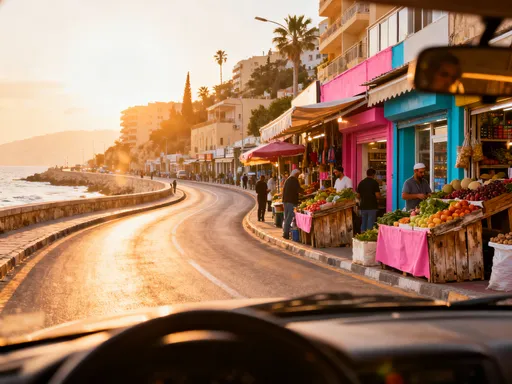
Stepping off the speedboat into Malé feels less like arriving at a tropical paradise and more like being welcomed into a living, breathing city with its own rhythm. At just over eight square kilometers, Malé is one of the most densely populated cities in the world, a far cry from the serene, isolated atolls that define the Maldives in popular imagination. The moment you land, the air hums with energy—scooters weave through narrow lanes, vendors call out from roadside stalls, and laundry flutters between pastel-colored buildings stacked tightly like puzzle pieces. There are no sprawling resorts here, no infinity pools overlooking turquoise lagoons. Instead, you’re met with the pulse of everyday life, raw and unfiltered.
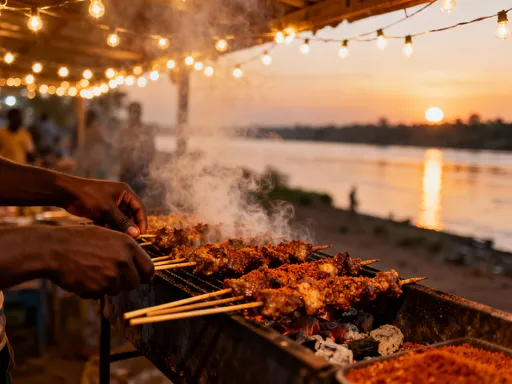
Yet this contrast is precisely what makes Malé so compelling. While many travelers fly in and out without leaving the airport island, those who step into the capital discover a different Maldives—one shaped by centuries of maritime trade, Islamic tradition, and island resilience. The call to prayer drifts from minarets above tiled rooftops, blending with the sizzle of street food and the clatter of fishermen unloading their morning catch. The scent of grilled tuna mingles with frangipani blossoms and diesel fumes, creating a sensory tapestry unlike any other destination in the archipelago.
What stands out most is the immediacy of human connection. Unlike the curated interactions of resort islands, Malé offers unscripted moments—a shared smile with a shopkeeper, a nod from an elder on a bench, the patient explanation of a local guide. These small exchanges reveal a community proud of its heritage and open to respectful visitors. The city doesn’t perform for tourists; it simply lives. And in that authenticity lies its quiet magic. For the traveler willing to look beyond the brochure, Malé becomes not just a gateway, but a destination in its own right.
The Heartbeat of Local Life: Fish Market & Craft Streets
If Malé has a soul, it beats loudest in the early hours of the Fish Market. Long before the sun climbs high, the wharf buzzes with activity as dhonis—colorful wooden fishing boats—dock with their overnight haul. Men in rubber boots and rolled-up trousers unload gleaming yellowfin tuna, their hands moving with practiced speed. The auction begins shortly after dawn, a rapid-fire exchange of calls and hand signals where buyers from restaurants, street vendors, and households bid for the freshest catch. There’s a rhythm to it, a language of trust and tradition passed down through generations.
This is more than commerce; it’s a cultural institution. Tuna is the backbone of Maldivian cuisine and economy, and the market is where that legacy comes alive. Locals speak with pride about the quality of their fish, caught using sustainable pole-and-line methods that have changed little over decades. For visitors, the experience is immersive—the smell of salt and smoke, the flash of silver scales, the sound of banter in Dhivehi. Cameras are welcome, but respect is expected. This is not a staged show; it’s the daily life of a maritime people.
Just a short walk from the market, tucked into quieter lanes, lie Malé’s craft streets—quiet keepers of tradition in a fast-moving city. Here, artisans practice skills that once thrived across the atolls. One alley is known for its lacquer work, where wooden boxes and bowls are hand-painted with intricate geometric patterns and floral motifs in bold reds, greens, and golds. The craft, influenced by Arab and Persian design, dates back centuries and was once a symbol of status among island nobility.
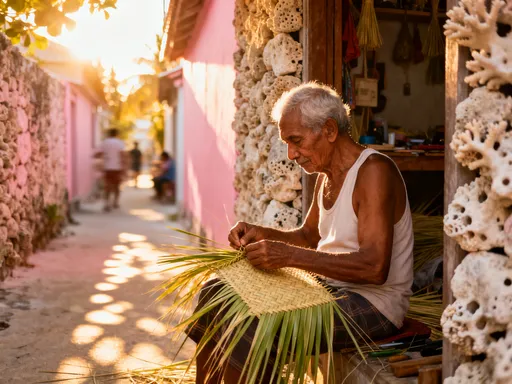
Another lane hosts mat weavers, mostly women, who sit outside their homes weaving fandu kuna—coconut palm fiber mats used for sleeping, sitting, and even ceremonial purposes. The process is labor-intensive, requiring months to complete a single mat, yet demand remains steady for both practical and cultural reasons. These crafts are not museum relics; they are living traditions, sustained by quiet dedication and community value. By supporting these artisans—whether through purchases or respectful observation—travelers become part of a larger story of cultural continuity.
Sacred Spaces: Mosques and Spiritual Calm
In a city where space is precious, mosques stand as anchors of peace and identity. Islam has shaped Maldivian life for over 800 years, and its presence is felt in the architecture, rhythm of the day, and values of the people. The most revered of these sacred spaces is the Malé Friday Mosque, also known as Hukuru Miskiy, a UNESCO-recognized site dating back to 1656. Built from coral stone hand-carved by local craftsmen, the mosque is a masterpiece of traditional Maldivian architecture. Its wooden eaves are adorned with intricate scrollwork, and the interior is cool and hushed, lit by soft natural light filtering through carved windows.
Non-Muslim visitors are welcome outside of prayer times, provided they dress modestly—shoulders and knees covered, shoes removed. Inside, the atmosphere is one of deep reverence. Prayer rugs are laid in perfect rows, and the air carries a faint scent of sandalwood. Guides often share stories of the mosque’s history, including how the coral stone was harvested from the reef and shaped without modern tools. Each block, each carving, speaks of patience and faith.
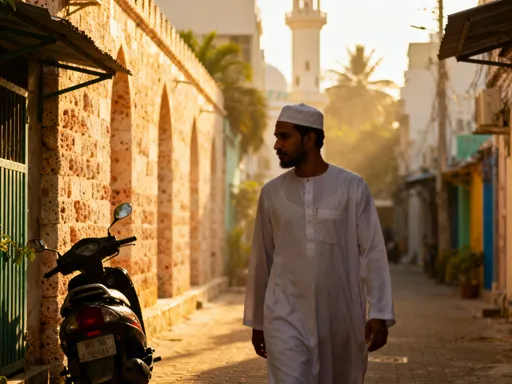
But the spiritual life of Malé extends beyond this historic site. Smaller neighborhood mosques dot the city, their calls to prayer echoing five times a day, marking the passage of time like a gentle heartbeat. At dusk, families gather in courtyards, children play nearby, and elders sit in quiet conversation. These moments are not performative; they are part of the fabric of daily life. For the observant traveler, they offer a window into a culture where faith is not separate from living, but woven into it.
Visiting these spaces requires sensitivity and humility. There are no grand tours or ticketed entries—just the simple act of being present, of listening, of observing with respect. In return, one gains something rare: a sense of stillness amid the city’s bustle, and a deeper understanding of what holds a community together.
Cultural Theme Areas: Where Tradition Lives On
Though small in size, Malé is rich in cultural micro-zones—distinct neighborhoods where specific traditions are preserved and practiced. These are not tourist attractions with signs and entry fees, but organic pockets of heritage maintained by residents who value their roots. One such area is the old town, where narrow alleys and low-rise buildings reflect centuries-old urban planning. The influence of Arab traders is still visible in the ornate doorways, Arabic inscriptions, and courtyard homes designed for ventilation and privacy.
Here, elders gather in shaded corners to share stories—oral histories of shipwrecks, royal lineages, and monsoon seasons past. These conversations, often conducted in soft Dhivehi, are informal acts of cultural transmission. Younger generations listen, sometimes recording on phones, ensuring that knowledge isn’t lost. Community centers and local libraries also host regular storytelling sessions, supported by cultural NGOs and the Ministry of Arts, Culture, and Heritage.
Another cultural theme area centers around Republic Square, a public space used for national celebrations, religious gatherings, and civic events. On Eid, families picnic on the grass, children fly kites, and traditional bodu beru drumming fills the air. The square is more than a park; it’s a stage for collective memory and shared joy. Nearby, a small open-air stage hosts performances of traditional dance and music, often during cultural festivals or school events.
These spaces thrive because of community ownership. Unlike top-down preservation projects, Malé’s cultural theme areas grow from within. Residents take pride in maintaining their neighborhoods’ character, whether through restoring old homes, organizing clean-up drives, or teaching crafts to youth. Government support exists—such as grants for heritage restoration and school programs in traditional arts—but the driving force is local commitment. This bottom-up approach ensures that culture remains alive, not frozen in time, but evolving with dignity.
Flavors That Tell a Story: Street Food with Soul
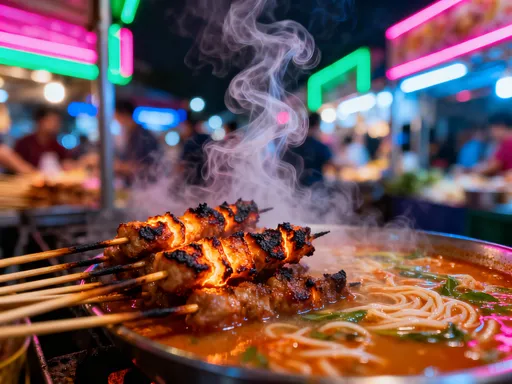
To taste Malé is to understand its heart. The city’s street food scene is not about spectacle or fusion; it’s about sustenance, memory, and connection. At the core of it all is garudhiya, a clear fish broth served with rice, lime, chili, and onions. Simple in preparation but profound in flavor, it’s a dish that unites families at breakfast and brings comfort after long days. Locals sip it slowly, often from small roadside stalls where the broth simmers all night, infused with just the right balance of ginger and curry leaves.
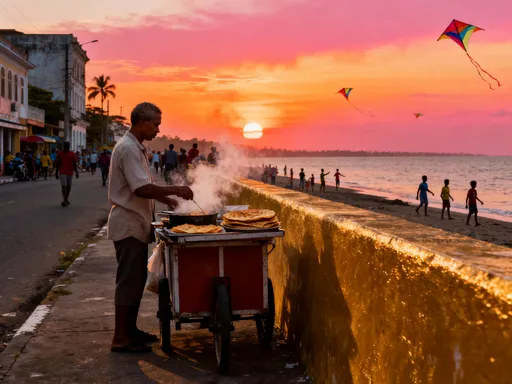
Paired with garudhiya is roshi, a soft flatbread cooked on a griddle, its surface slightly blistered from the heat. Watching a vendor stretch and flip the dough is a small performance in skill and rhythm. Then there are bajiya—crispy, half-moon-shaped fritters filled with spiced coconut, tuna, or onion. Fried to golden perfection, they are a favorite snack, often shared with tea in the late afternoon.
One of the most memorable experiences is joining locals at a no-frills eatery, sitting on plastic stools, passing plates without formality. There’s an unspoken warmth in these moments—a grandmother offering extra chili, a child grinning as you try your first bite of hedhikaa (a platter of savory snacks). These meals are not about presentation; they’re about presence. Each dish carries generations of adaptation, from ancient seafaring diets to modern urban life.
What’s striking is how food functions as a bridge. It invites conversation, dissolves barriers, and tells stories without words. A vendor might explain how her mother taught her to temper the broth just right, or how certain spices were once traded with Arab merchants. In these exchanges, cuisine becomes history, and hospitality becomes heritage. For the traveler, eating like a local isn’t just a culinary choice—it’s an act of cultural respect.
Challenges & Changes: Culture in a Modern Capital
Malé’s cultural resilience does not exist in isolation. The city faces real pressures—limited land, rising sea levels, and the demands of a growing population. With over 200,000 residents packed into a tiny island, space is at a premium. High-rise buildings rise to accommodate housing needs, sometimes at the expense of historic structures. Younger generations, influenced by global media and seeking broader opportunities, sometimes view traditional crafts and practices as outdated.
Tourism adds another layer of complexity. While most visitors bypass Malé for resort islands, the city is increasingly becoming a day-trip destination. This brings economic benefits but also risks—cultural commodification, noise pollution, and strain on infrastructure. Authorities are working to manage this balance, promoting responsible tourism through guided heritage walks, designated photo zones, and community-led tours that ensure benefits go directly to residents.
At the same time, efforts to preserve culture are gaining momentum. Schools now include Maldivian history, language, and traditional arts in their curricula. Cultural festivals, such as the National Youth Festival and Malé Heritage Week, celebrate local talent and encourage youth participation. NGOs partner with artisans to expand market access, using online platforms to sell lacquerware and handwoven mats to international buyers.
Technology, too, plays a role. Digital archives are being developed to record oral histories, traditional songs, and endangered dialects. Young filmmakers are documenting elders’ stories, creating short films that are shared in schools and community centers. These initiatives don’t resist change—they harness it, ensuring that tradition isn’t lost but adapted for new generations.
The challenge is not to freeze Malé in time, but to help it grow with integrity. This means respecting the past while embracing the future, protecting heritage without stifling progress. It’s a delicate balance, but one the city is navigating with quiet determination.
Why Malé Matters: Rediscovering the Maldives’ True Identity
Too often, the Maldives is reduced to a postcard: white sand, blue water, luxury escapes. But to know the country only through its resorts is to miss its soul. Malé offers a different narrative—one of resilience, community, and cultural depth. It reminds us that every nation has a heartbeat, and sometimes, that pulse is loudest in its most unassuming corners.
Visiting Malé is not about ticking off landmarks. It’s about slowing down, listening, and allowing yourself to be surprised. It’s about realizing that a 20-minute walk through a fish market can teach you more about a culture than a week of curated resort experiences. It’s about understanding that the Maldives is not just a destination for the body, but for the mind and spirit.
For the 30- to 55-year-old traveler—often balancing family, work, and the desire for meaningful experiences—Malé offers something rare: authenticity without austerity, depth without difficulty. It’s a place where you can connect with locals over a shared meal, witness centuries-old craftsmanship, and stand in silence within ancient walls, all in a single day.
More than that, Malé challenges the way we travel. It asks us to look beyond convenience, to step off the beaten path, and to value the everyday as much as the extraordinary. In doing so, it doesn’t just enrich a trip—it transforms it. The next time you plan a journey to the Maldives, don’t rush through the capital. Stay a little longer. Let Malé surprise you. Because sometimes, the smallest islands hold the biggest stories.