Tucked away in Japan’s rugged mountains, Shirakawa-go is more than just picturesque gassho-zuri farmhouses and snow-blanketed charm. Beyond the postcard views lies a quiet network of small-scale commercial spaces—family-run stalls, local craft corners, and village-operated shops—that reveal the heartbeat of daily life. I wandered these lanes not as a tourist, but as someone curious about how tradition sustains itself. What I found was both unexpected and deeply authentic. This is not a place where commerce shouts; it whispers, through the rustle of handmade paper, the creak of wooden shelves, and the soft exchange of goods between hands. Here, economy and heritage walk side by side, each supporting the other in a delicate balance that has endured for generations.
Beyond the Postcard: The Real Commercial Pulse of Shirakawa-go
Most travelers arrive in Shirakawa-go expecting beauty—and they find it in abundance. The UNESCO World Heritage site is famed for its steeply thatched gassho-zuri roofs, designed to shed heavy winter snow, and its serene, almost dreamlike setting amid the forested mountains of Gifu Prefecture. Yet behind the lens of every camera, beyond the curated photo spots and souvenir kiosks near the main observation decks, lies a quieter, more enduring reality: a living economy rooted in community, necessity, and quiet pride. While tourism brings visitors, it is local commerce—small, unassuming, and deeply personal—that keeps the village breathing.
As you step off the main path and into the narrower lanes that weave between homes, the commercial landscape begins to reveal itself. There are no neon signs or branded storefronts. Instead, commerce announces itself through wooden crates filled with mountain vegetables, handwritten placards indicating prices in neat Japanese script, and low wooden counters displaying hand-carved spoons or bundles of dried herbs. These are not tourist traps, but extensions of homes and farms—places where families sell what they make, grow, or inherit. The rhythm of trade here is slow, respectful, and deeply tied to the seasons and the village’s collective values.
What makes this commercial undercurrent so compelling is its invisibility to the casual observer. Unlike other heritage destinations that have been overtaken by mass-market tourism, Shirakawa-go maintains a remarkable balance. The village council strictly regulates new construction, commercial signage, and even the number of daily visitors. This ensures that every shop, stall, or craft corner remains in harmony with the surrounding environment. The result is a commercial culture that does not exploit the village’s charm but instead reflects it—humble, intentional, and grounded in tradition.
The Heart of the Village: Wada House and Its Surrounding Market Zone
At the center of Shirakawa-go’s quiet commercial life stands the Wada House, one of the largest and most historically significant gassho-zuri residences in the village. More than just a museum piece, this centuries-old farmhouse functions as a cultural and economic anchor. While parts of the house are open for visitors to explore, the surrounding area has organically evolved into a modest but vibrant market zone. Along the footpaths leading to and from the house, small stalls and enclosed booths line the edges, each operated by local families or artisans.
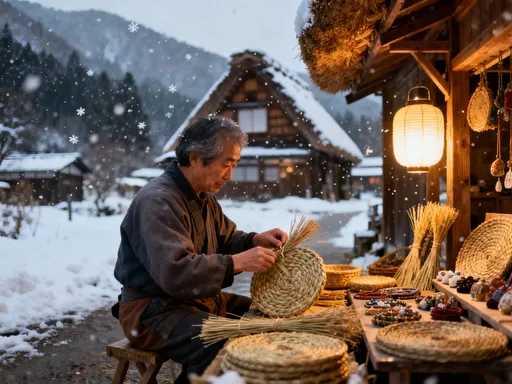
Here, visitors encounter goods that speak directly to the region’s heritage: sheets of delicate washi paper, hand-stenciled with floral patterns; bundles of indigo-dyed cotton fabric; and wooden ladles carved from local cypress. These items are not mass-produced imports but the fruits of skilled hands, often passed down through generations. What stands out is the absence of aggressive salesmanship. Vendors do not call out to passersby or offer discounts. Instead, they sit quietly beside their wares, ready to share stories if asked—about how the paper is made from mulberry bark, or how the fabric’s dye comes from plants gathered in the nearby hills.
This personal connection transforms shopping into an act of cultural exchange. One elderly woman, seated beside a display of woven rush mats, explained how each mat takes three days to complete and is traditionally used in tea ceremonies. She did not urge me to buy; she simply shared her knowledge, letting the craftsmanship speak for itself. In this way, commerce in Shirakawa-go is not transactional but relational—a quiet dialogue between visitor and resident, between past and present.
Craft as Commerce: How Local Artisans Keep Tradition Alive
In a world increasingly dominated by fast production and disposable goods, the artisans of Shirakawa-go offer a powerful counterpoint. Their work is not merely artistic expression but a vital economic activity that sustains both families and traditions. From the intricate weaving of wara—rice straw—into durable baskets and footwear, to the carving of wooden utensils used in daily cooking, each craft serves a practical purpose while preserving cultural memory.
I spent an afternoon observing a craftsman in his small workshop near the village center, where he shaped wooden bowls using a foot-powered lathe, a technique unchanged for centuries. Shavings curled around his feet as he worked, the scent of fresh cedar filling the air. He explained that while he sells most of his pieces to visitors, some are used within the village—passed down, gifted, or used in seasonal festivals. His son occasionally helps, learning the craft not through formal lessons but through daily observation and repetition.
These crafts are more than souvenirs; they are cultural exports that carry the identity of Shirakawa-go beyond its borders. When a traveler purchases a handwoven basket or a piece of carved wood, they are not just acquiring an object but participating in a legacy. The income generated supports the artisan’s household, enables the purchase of materials, and, in some cases, funds the maintenance of historic homes. In this way, craftsmanship becomes a form of economic resilience, allowing remote communities to remain self-sufficient despite geographic isolation.
Moreover, the authenticity of these goods is carefully guarded. Unlike other tourist destinations where “handmade” labels can be misleading, Shirakawa-go’s artisans are known personally within the community. Many products bear tags with the maker’s name and village origin, reinforcing transparency and trust. This authenticity is not marketed—it is simply assumed, because in a place where everyone knows each other, reputation matters more than branding.
Seasonal Shifts: How Weather and Tourism Shape Local Business
The rhythm of commerce in Shirakawa-go is deeply tied to the seasons, reflecting both natural cycles and tourist patterns. Winter, with its heavy snowfall and ethereal beauty, draws the largest crowds. During this time, the village transforms subtly—more stalls open, hours extend, and vendors offer seasonal specialties like roasted sweet potatoes, hot amazake (sweet fermented rice drink), and limited-edition crafts tied to the New Year celebrations.
Yet this peak season is also carefully managed. To protect the fragile environment and prevent overcrowding, the village limits the number of daily visitors, especially during holidays. While this means fewer potential customers, it also ensures that commerce does not overwhelm daily life. Vendors appreciate the balance—enough visitors to sustain their businesses, but not so many that the village loses its soul.
In contrast, spring and autumn bring fewer tourists but a different kind of commercial activity. With the snow melted and the mountainsides green, local trade becomes more inward-facing. Farmers sell fresh vegetables at roadside stands, often using an honor-based payment system—cash boxes left beside baskets of produce, trusting visitors to pay what is owed. These stands operate with quiet confidence, a testament to the community’s deep-rooted values of honesty and mutual respect.
Summer, though warmer and more humid, sees a resurgence in craft workshops and cultural demonstrations. Some families open parts of their homes to visitors, offering hands-on experiences like washi paper making or indigo dyeing. These activities are not only educational but also serve as income generators, allowing residents to share their heritage while earning a livelihood. The seasonal ebb and flow of commerce, therefore, is not a challenge to overcome but a natural rhythm to be embraced.
The Role of Community Cooperatives in Village Commerce
One of the most remarkable aspects of Shirakawa-go’s economy is its collective nature. Unlike many tourist destinations where individuals compete for customers, here much of the commercial activity is coordinated through community cooperatives. These cooperatives, often organized by neighborhood or family group, oversee the rotation of shop spaces, ensure fair pricing, and maintain standards of authenticity.
For example, the sale of certain traditional foods—like handmade soba noodles or preserved mountain vegetables—is managed collectively. Families take turns preparing and selling these items, ensuring that no single vendor monopolizes demand. This system fosters cooperation rather than competition, reinforcing the village’s emphasis on harmony and shared responsibility.
Profits from these cooperative ventures are often reinvested into community projects. A portion of sales from craft stalls may go toward roof maintenance for historic homes, which require costly repairs due to their thatched construction. Other funds support youth programs or cultural preservation initiatives, ensuring that younger generations remain connected to their heritage. In this way, commerce becomes a tool for sustainability—not just economic, but cultural and environmental.
The cooperative model also helps protect against exploitation. By setting guidelines for what can be sold and how it is presented, the village ensures that commercial activity remains aligned with its values. There are no plastic trinkets, no imitation crafts, and no misleading claims. What you find in Shirakawa-go is what it claims to be—genuine, locally made, and deeply rooted in place.
From Farm to Stall: Agricultural Products as Commercial Assets
While crafts and cultural goods often capture attention, agriculture remains the foundation of Shirakawa-go’s economy. The village’s terraced fields and mountain gardens yield a variety of crops adapted to the harsh climate—hardy vegetables, mountain herbs, and medicinal plants that have been cultivated for generations. These products, though simple, are highly valued for their purity and flavor.
At small roadside stands, often no more than a wooden shelf under a sheltering eave, elderly farmers display their harvest. Bunches of wild garlic, purple-stemmed turnips, and bundles of dried yomogi (mugwort) rest beside jars of homemade miso and pickled vegetables. Payment is frequently self-serve, with a small cash box and a handwritten price list. There is no surveillance, no attendant—just trust.
One morning, I watched as a woman in her seventies arranged freshly dug potatoes on a crate, her hands weathered but steady. When I asked about the miso in glass jars behind her, she smiled and explained that it was made from soybeans grown on her family’s plot, fermented in wooden barrels for over a year. She offered a small sample on a cracker—rich, earthy, with a deep umami flavor unlike anything from a supermarket. I bought two jars, knowing that my purchase supported not just her household but the continuation of a centuries-old food tradition.
Other agricultural specialties include small portions of Hida beef—renowned for its marbling and tenderness—sold in vacuum-sealed packs for travelers to take home. Wild mountain tea, harvested from native shrubs, is another prized item, its grassy, slightly bitter taste reflecting the purity of the alpine environment. These products are not marketed with flashy labels but sold with quiet pride, their value understood by those who know to look.
Preservation Through Purchase: Ethical Consumerism in a Heritage Site
Traveling through Shirakawa-go, one realizes that every purchase carries meaning. To buy from a local vendor is not merely to acquire a souvenir but to participate in a delicate ecosystem of preservation. Each yen spent supports a family, maintains a tradition, and helps protect a way of life that might otherwise fade. In this context, consumerism becomes an act of stewardship—an ethical choice that honors both people and place.
Responsible tourism in Shirakawa-go means looking beyond the scenery. It means stepping off the main path, engaging with residents, and choosing authenticity over convenience. It means understanding that the quiet woman selling handmade paper is not just a vendor but a guardian of knowledge, and that the wooden spoon carved from cypress is not just a kitchen tool but a piece of living history.
The village offers quiet lessons in sustainability, resilience, and community. It shows how tradition can thrive not by resisting change, but by adapting with integrity. The commercial life of Shirakawa-go is not separate from its cultural heritage—it is woven into it, as inseparable as the straw in a thatched roof.
To future visitors, the invitation is clear: come with curiosity, not just cameras. Listen more than you speak. Buy not because something is pretty, but because it matters. Let your journey be one of connection, not just observation. In the hidden corners of commerce in Shirakawa-go, you will find not just goods, but the quiet heartbeat of a village that continues to live, work, and endure—one handmade basket, one jar of miso, one act of trust at a time.